

The math has been getting worse for years, but the acceleration over the last twelve months has moved the conversation from “we need to get better at vulnerability management” to “the current model fundamentally cannot keep pace.”
I’ve been tracking this trajectory across multiple articles, from Vulnpocalypse and The Attack Surface Exponential to The NVD Just Threw in the Towel, and the 2026 Verizon DBIR confirmed what the trendlines have been screaming. Vulnerability exploitation is now the leading initial access vector in confirmed breaches, nearly doubling phishing for the first time in the report’s history.
That isn’t just a data point, it’s the clearest signal yet that the era of reactive, human-paced vulnerability management is ending, and that defenders need to match the speed and autonomy that attackers are already operating with to have any chance of keeping pace and effectively mitigating organizational risks.
Most teams aren't short on vulnerability detections, they're drowning in them.
The signal-to-noise problem is the actual problem. Resilient Cyber’s partner, Zafran, put together “A Practical Guide: Evolving VM to CTEM” on moving from legacy VM to CTEM without boiling the ocean, start where you are, prioritize what's actually exploitable, iterate from there.
Worth the read if "we have 40,000 criticals" sounds familiar.

The Exploitation Timeline Has Collapsed
The gap between vulnerability disclosure and active exploitation has compressed to the point where traditional remediation cycles are functionally irrelevant for the most critical findings.
As I covered in The Zero Day Clock Is Ticking, research tracking the median time-to-exploit found it collapsed from 771 days in 2018 to roughly 4 hours by 2024.
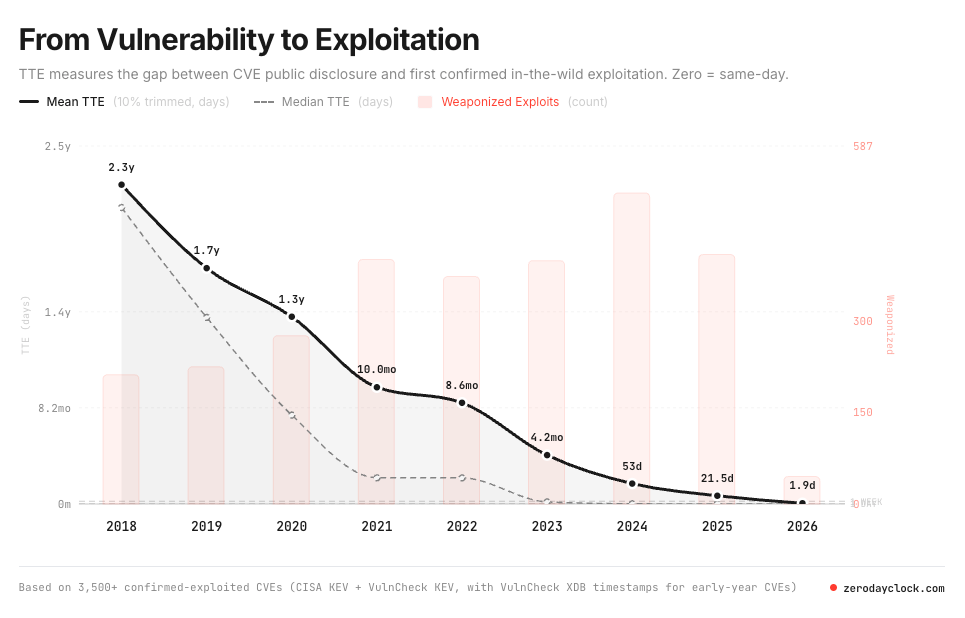
The MOAK autonomous exploitation project demonstrated that an AI system could exploit 174 out of 178 CISA Known Exploited Vulnerabilities in an average of 21 minutes each, with no human in the loop, and the 2026 DBIR found that organizations take a median of 43 days to remediate edge device vulnerabilities, with only 54% remediated within an entire year.
Those two numbers, 43 days versus 4 hours, tell the whole story of why exploitation has become the dominant attack vector. Defenders are operating on patch cycles measured in weeks and months while attackers, increasingly aided by AI tooling, are operating in minutes and hours.
The window between disclosure and exploitation that the entire vulnerability management model was built around has effectively closed.
This is compounded by the sheer volume.
FIRST projected approximately 59,000 new CVEs for 2025, a 50% increase over the prior year, and 2026 is on pace to exceed that.
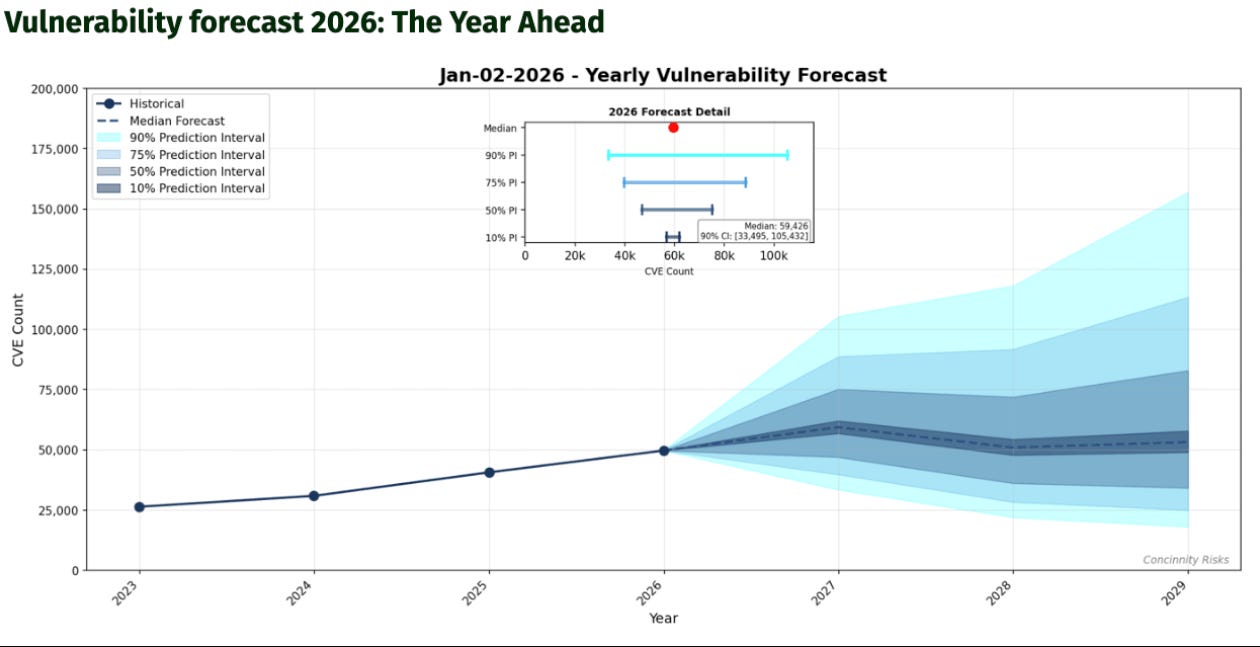
As I wrote in The NVD Just Threw in the Towel, NIST reclassified roughly 29,000 backlogged CVEs to “Not Scheduled,” acknowledging that the data infrastructure the industry relies on for vulnerability prioritization can’t keep up with the input volume.
More vulnerabilities are being discovered than ever before, the enrichment data needed to prioritize them is arriving late or not at all, and the exploitation timeline has compressed to the point where “patch quickly” is no longer a viable strategy for the most dangerous findings.
AI Is Accelerating Both Sides, But Not Equally
I explored the broader dynamics of AI in cybersecurity in The AI Cyber Capability Curve, and the core observation is playing out exactly as expected.
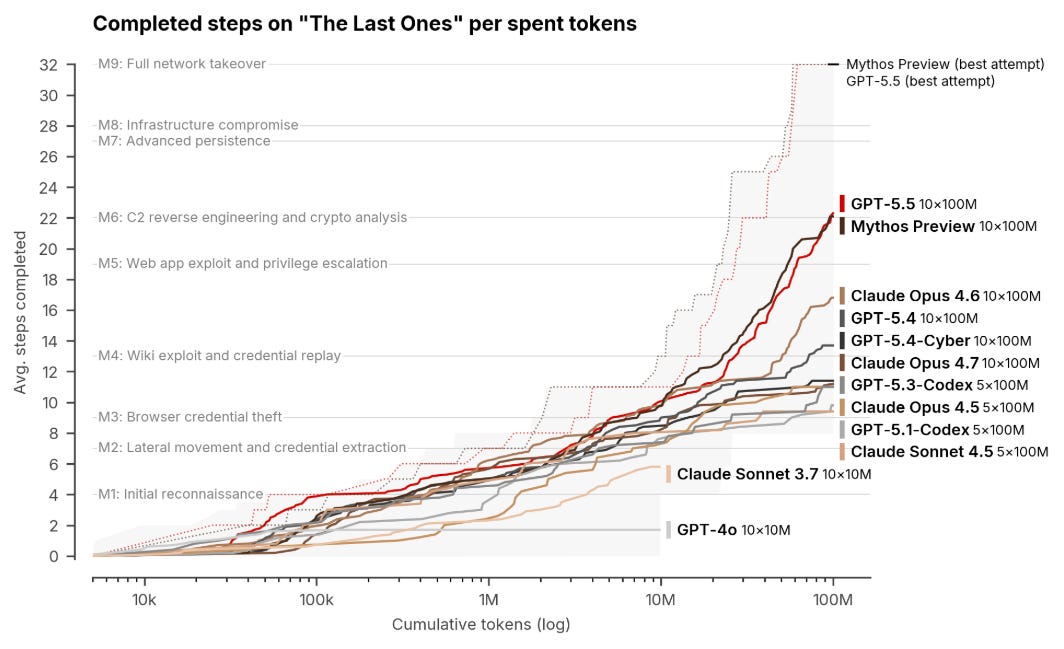
AI is amplifying capabilities on both sides of the security equation, but the attacker side is benefiting faster because offensive tasks are structurally simpler to automate and validate than defensive ones.
Generating a working exploit for a known vulnerability is a well-scoped, deterministic problem that AI excels at. Proof-of-concept code that once took researchers days to develop is now being generated in minutes. Researchers have demonstrated AI agents achieving an 87% success rate in autonomously identifying and exploiting one-day vulnerabilities in real-world software. Google DeepMind’s “Big Sleep” agent found a previously unknown vulnerability in SQLite, marking one of the first documented cases of AI discovering an exploitable memory safety bug in widely deployed software.
Defending against exploitation, by contrast, requires understanding organizational context, asset criticality, compensating controls, patch dependencies, business impact, and change management constraints.
These are exactly the kinds of multi-variable, context-dependent decisions that have historically resisted automation. The result is an asymmetry that grows wider with each generation of AI tooling.
Attackers are automating exploitation at machine speed. Defenders are still running remediation through human-paced processes that were designed for a world where they had weeks or months of lead time.
As I discussed in Claude, Mythos, and Why It Matters, Anthropic’s Mythos moment put a fine point on this. When a leading AI lab demonstrates advanced autonomous capabilities, the downstream implications for offensive security tooling are immediate and concrete.
There’s no longer a question whether AI will be weaponized for vulnerability exploitation at scale, it already has been. The question is whether defenders can operationalize AI and autonomy in their own workflows fast enough to close the gap, which has been a key recommendation in leading guidance, such as in Cloud Security Alliance’s “Building a AI-Ready Vulnerability Security Program”.
Recent reports, such as the latest Verizon DBIR make the case even stronger, showing that patches are still taking weeks but exploitation has collapsed to hours. The latest DBIR found that exploitation of vulnerabilities is the #1 attack vector, twice as high as #2, and growing, as attackers continue to capitalize on remediation bottleneck.
The Case for Autonomous Defensive Workflows
The traditional vulnerability management lifecycle, scan, prioritize, ticket, patch, verify, was built for a tempo that no longer exists.
Each step in that chain introduces latency, and latency is the thing defenders can least afford when exploitation timelines are measured in hours. The industry has recognized this at the conceptual level, which is why frameworks like Continuous Threat Exposure Management (CTEM) have gained traction as the successor to legacy VM programs.
As I wrote in Vulnerability Management Evolves to CTEM, the shift from periodic scanning and static prioritization to continuous, context-aware exposure management represents a necessary evolution.
But CTEM as a framework still requires operationalization, and that’s where most organizations stall. They understand the need for continuous assessment, business-aligned scoping, and validation-driven prioritization. They struggle to execute it at the speed the threat environment demands because their workflows still depend on human analysts to interpret findings, human operators to implement remediations, and human decision-makers to approve changes. Each of those handoffs introduces hours or days of delay in a world where exploitation happens in minutes.
This is why I wrote in Elevating CTEM with Agentic Exposure Management that the next evolution of exposure management requires agentic AI workflows that can operate autonomously within defined guardrails. The concept isn’t replacing human judgment entirely, it’s removing humans from the steps that don’t require judgment, automating the repetitive, time-sensitive execution work so that human analysts can focus on the genuinely complex decisions that benefit from their expertise.
As I explored in Vulnerability Management in the Age of Autonomous Exploitation, where I unpacked CSA’s guidance, the organizations that will navigate this era successfully are the ones that can match autonomy with autonomy.
That means workflows that detect new exposures within hours of disclosure, assess exploitability against the organization’s actual environment and compensating controls, generate and route remediation actions through existing tooling, and execute compensating controls without waiting for a patch cycle.
This is not a future aspiration, it’s a current operational requirement for any organization facing the exploitation timelines documented in the 2026 DBIR and other sources.
What Autonomous Workflows Look Like in Practice
Describing autonomous defensive workflows in the abstract or publications is fairly straightforward. Operationalizing them is where the real challenge lives, because autonomy without context is just faster noise. An autonomous system that generates thousands of tickets for vulnerabilities that aren’t exploitable in your environment hasn’t solved the problem, it’s added to it and created the exact type of toil that had led to developers dreading engaging with us in cyber.
Resilient Cyber’s partner, Zafran’s Zero Day Agent is one example of how autonomous workflows can be operationalized against the AI-augmented exploitation problem. The approach is built around a core insight that most vulnerability management programs miss entirely. Not every vulnerability that scores a 9.8 on CVSS is actually exploitable in every environment, because the presence of compensating controls, network segmentation, runtime configurations, and defensive tooling already in place can neutralize many critical findings before a patch is ever applied.
The Zero Day Agent’s workflow runs in a continuous loop. When a new zero-day or high-priority vulnerability is disclosed, the agent automatically identifies affected assets across the environment by cross-referencing against the organization’s software inventory and runtime presence data.
It then assesses whether the vulnerability is actually exploitable given the organization’s specific defensive posture, evaluating factors like internet reachability, existing firewall rules, EDR coverage, and WAF configurations.
For vulnerabilities where compensating controls already neutralize the risk, the agent documents that finding and moves on. For the subset that are genuinely exploitable, it automatically generates work items with pre-populated context, including affected assets, exploitability analysis, and recommended remediation steps, and routes them through existing ITSM tools.
We’ve seen the rise and popularity of “reachability analysis” in the SCA and runtime context for applications, and this sort of zero day agent helps take that a step further with broader organizational and environment context beyond just code.
This is a critical distinction from traditional vulnerability management, which treats every critical-severity finding as equally urgent regardless of environmental context. Zafran’s data suggests that roughly 90% of critical vulnerabilities are not exploitable in a given environment once compensating controls are properly mapped, which means the remediation effort can focus on the 10% that actually represent real risk. That’s the difference between an autonomous workflow that creates value and one that just creates velocity.
This sort of capability has been elusive for organizations both due to the level of effort needed to validate exposure, but also due to the comprehensive environmental and organizational context needed to determine it.
The practical impact is compressing the response timeline from weeks to hours. Instead of a vulnerability disclosure triggering a manual triage process that takes days to assess scope, additional days to prioritize against the backlog, and weeks to schedule and deploy patches, the autonomous workflow handles discovery, assessment, and routing within hours of disclosure.
For organizations operating under the exploitation timelines documented in the 2026 DBIR or M-Trends, that compression isn’t a nice-to-have, it’s the difference between responding before exploitation and performing incident response after it.
As someone who literally wrote the book on effective vulnerability management, there’s no question to me that vulnerability management needs to become autonomous. Data in reports such as M-Trends, DBIR and broader industry trends has already answered that.
That said, many are looking for guidance on how to operationalize that autonomy.
You can Join Zafran for the upcoming webinar With Zafran’s CISO Nate Rollings, along with Lawrence Pingree of SACR where they’re dig deeper into what that operationalization looks like in practice and how to navigate the transition from traditional VM to autonomous workflows.

From Maturity Model to Operational Reality
The evolution from legacy vulnerability management through risk-based approaches to CTEM represents a maturity curve that most organizations are somewhere in the middle of navigating. Zafran’s updated CTEM whitepaper adds a fifth stage to the maturity model, Autonomous Workflows, which represents the operational end-state that the current threat environment demands.
The progression is logical and aligns with the broader industry trends that warrant the organizational evolution of CTEM.
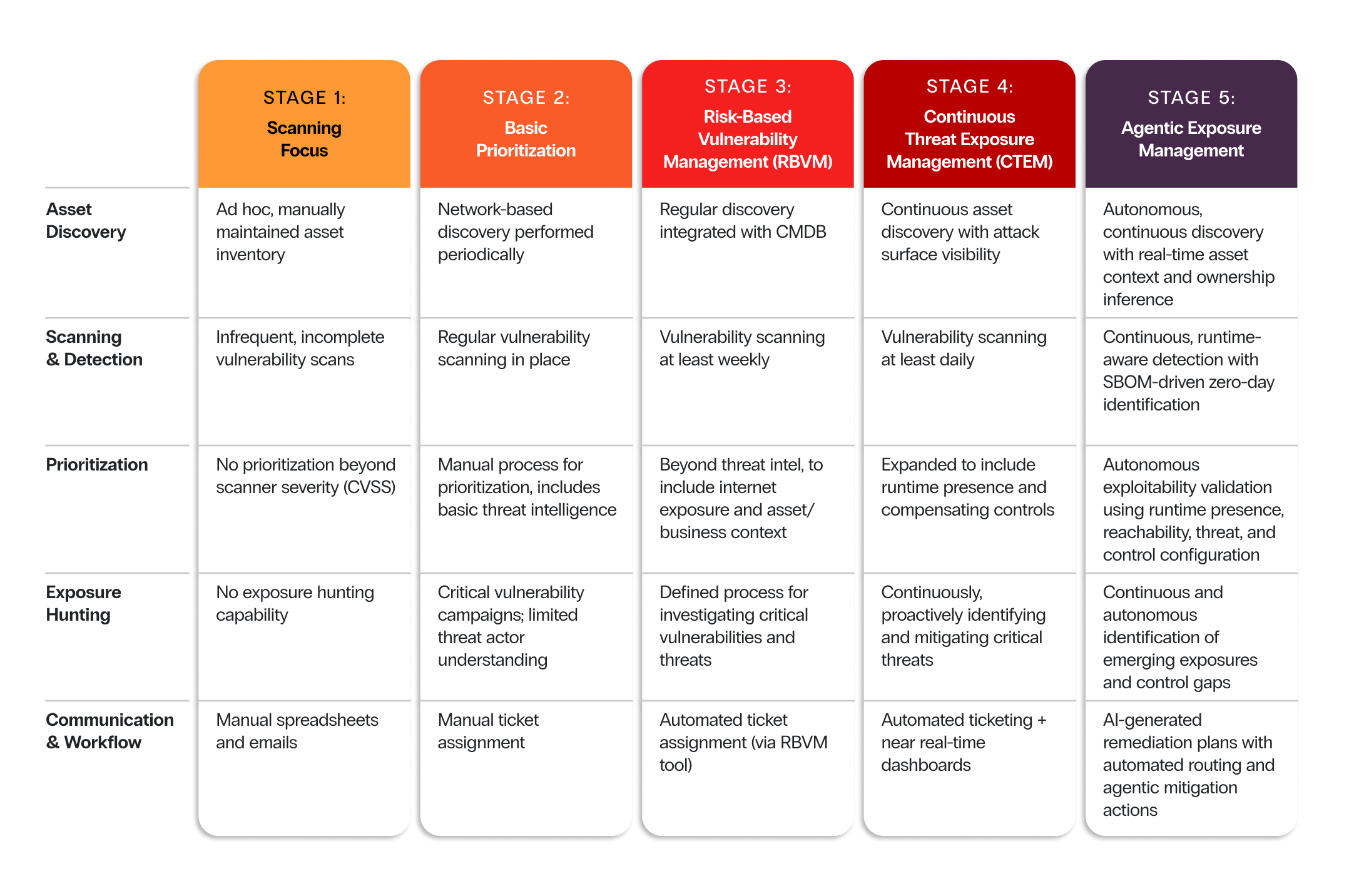
Stage one is scanner-focused vulnerability management, counting CVEs and generating reports.
Stage two introduces basic prioritization, typically CVSS-driven.
Stage three moves to risk-based vulnerability management, incorporating threat intelligence and asset context.
Stage four is full CTEM, with continuous scoping, discovery, prioritization, validation, and mobilization.
Stage five adds autonomous execution, where agentic AI systems handle the high-volume, time-sensitive operational work within human-defined policy guardrails.
Most organizations I talk to are somewhere between stages two and four, and the jump to autonomous workflows feels daunting because it requires trust in automated systems making decisions that have traditionally been reserved for human analysts.
That concern is reasonable, but it needs to be weighed against the alternative, which is continuing to run human-paced processes against machine-speed exploitation. The organizations that insist on human review of every remediation decision are implicitly accepting that they will be slower than their adversaries on every critical vulnerability. In the current environment, that is a choice with real consequences for the organizations we’re supposed to be defending.
The guardrails matter as well and autonomous doesn’t mean uncontrolled. The most effective implementations maintain human oversight at the policy level, humans define which classes of actions the autonomous system can take, what severity thresholds trigger automated response, and what changes require approval, while delegating the execution of those policies to automated workflows.
The human role shifts from doing the work to governing how the work gets done, which is both a more efficient use of scarce security talent and a more sustainable operating model given the volume of findings most programs are managing.
The Structural Shift Ahead
The AI-driven exploitation era isn’t a temporary phase. Every structural trend in the data, more vulnerabilities, faster exploitation, expanding attack surfaces, degrading data infrastructure, AI-accelerated offensive tooling, points in the same direction. The organizations that will navigate this successfully are the ones that operationalize autonomy in their defensive workflows now, rather than waiting for the exploitation gap to widen further.
As I argued at the SANS Agentic AI Security Summit in D.C. in April this year, cyber needs to shift from being a late adopter and laggard to being an early adopter and innovator if we hope to have any chance of keeping pace with attackers in the AI era.
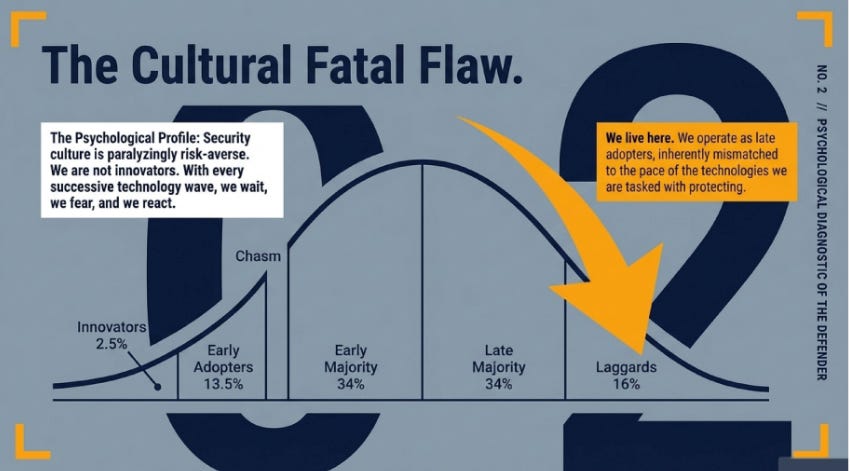
The frameworks exist, CTEM provides the conceptual architecture, industry guidance is encouraging this shift and agentic AI provides the execution capability. Solutions like Zafran’s Zero Day Agent demonstrate that autonomous defensive workflows aren’t theoretical or aspirational. They’re operational today, compressing response timelines from weeks to hours and focusing human expertise where it actually matters.
It’s time for security to be an innovator in this technological wave, rather than a laggard, and one of the areas most ripe for disruption for us is leveraging AI and Agents for the biggest bottleneck of all - remediation.